

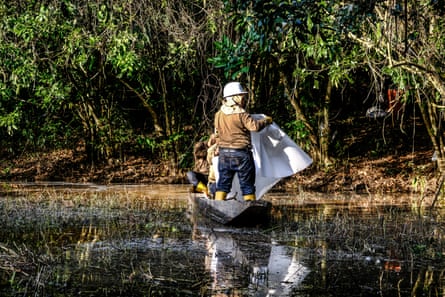
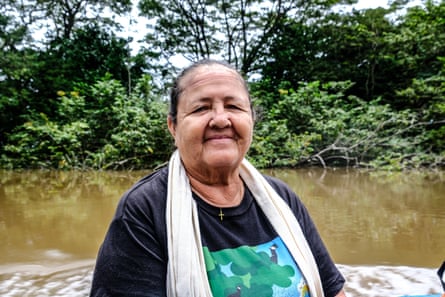
Standing upon her wooden canoe, a blade at the ready, Yuly Velásquez chops through reeds matted with blackened sludge. Close by, a broken conduit has released a slick of crude into the San Silvestre marshlands in Barrancabermeja, a major petroleum hub, suffocating the aquatic life.
“The devastation is enormous,” explains Velásquez, leader of a community fishery association. “For the fish, the animals and vegetation, it means a death sentence.”
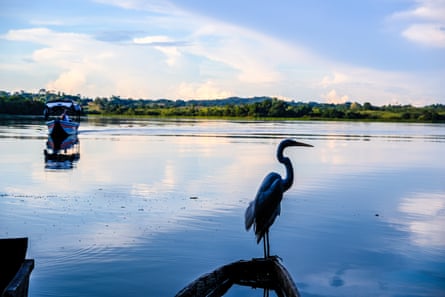
With its wetlands, ponds and jungles, Barrancabermeja sits in a biodiversity hotspot – the home of threatened freshwater turtles and sea cows, and the wetlands act as a route used by roaming big cats.
Yet it is also a major crude production site. Flames from burn-offs shoot into the sky from a maze of tanks, pipes and chimneys, producing up to a quarter-million barrels of petroleum a day.
For decades, the local refinery, operated by the national oil company, has also been alleged to releasing oil and poisonous sludge into nearby rivers and wetlands, and of causing leaks that contaminate the region’s fishing grounds.
Regulators and community members say the impact has been catastrophic: fish populations have collapsed, water quality has deteriorated and numbers of aquatic mammals – once regarded as a guardian spirit of the wetlands – are now thought to be on the brink of collapse.
A study published last year identified more than 800 records of “serious pollution events” linked to the oil company, with most occurring from the mid-1990s to the mid-2010s.
The report, based on a collection of internal documents, also described a “web of deceit and cover-ups” allegedly used to cover up the spills, noting that a 20% were not reported to authorities.
Another inquiry last year also found the company has had leaks hundreds of times since then.
The company has disputed assertions that it has polluted local water sources, insisting it fully complies with national regulations. But by the end of last year, extensive zones of the territory were still contaminated by a pipeline fracture, with an oily sheen the water and the air pungent with petrol.
The company says its local branch is working to contain and remediate the leaks, maintains that its operations comply with environmental regulations and highlights funding to cut discharges and conserve species.
The firm also disputed the claims contained in the leaked documents, insisting that incidents were properly documented and most historical contamination sites had already been cleaned up.
The Human Cost
Yet for riverside communities, which depend almost entirely on fishing for their survival, the impact is undeniable. “Yet again, hundreds of fish, snakes, birds, turtles and caimans have died overnight,” says Luis Carlos Lambraño, 56, who has been fishing in these waters for 37 years.
“If we can’t fish, we can’t eat,” he says. “I feel utter sadness.”
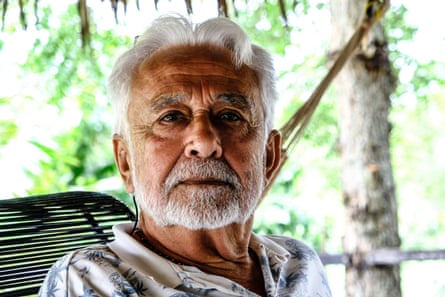
Ronaldo Martínez, 68, who farms water buffalo, says the contamination has become impossible to ignore.
“The buffalo drink the water, get poisoned and die,” he says. “We’ve had about 30 buffalo die on us this way in the last five years.”
Martínez says that coming across a dead animal was not common in the past. “It happened sometimes, but it wasn’t very common,” he says. “But lately, it’s become routine to find dead animals, dead caimans, dead fish.” He adds that when the fish are cut open during oil spills, “they taste like oil”.
He says the responsibility lies with the oil company. “[It] is our largest company,” he says. “They should have a way of managing their pools. Their treatment facilities should be working.”
The Rule of the "Gasoline Gangs"
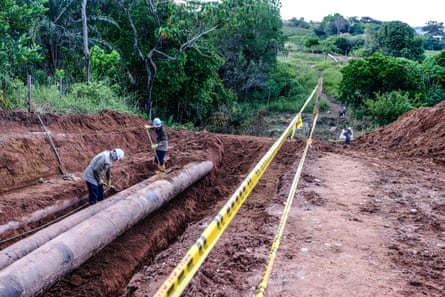
Adding to the disaster is the expansion of illegal armed groups that seek to dominate the area. So-called “gasoline gangs” have moved into the area, which is considered a key route for moving illegal goods, hacking into the oil pipelines that crisscross through the waterways to pilfer and traffic the fuel illicitly.
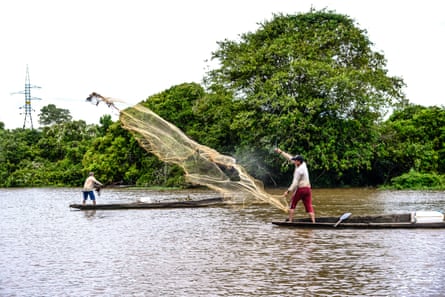
“Every single day they steal the gasoline,” says Velásquez, who, along with her colleagues, monitors biodiversity in the area. “They collect it in these large sacks – when they break, which has happened at least twice, it spills into all of the water.”
The presence of armed groups has also made fishing extremely risky. Local activists say they have faced repeated menaces, coercion and murder plots. Drones are used by armed groups to monitor and shadow fishing boats until they leave the area.
Velásquez is one of the campaigners at risk. She says she has suffered repeated attacks on her home, three assassination attempts – one in which her bodyguard was shot – and many threats to her family for speaking up against the contamination and the armed groups.
The threats are taken very seriously as Colombia is one of the most dangerous countries worldwide for community leaders, accounting for a third of all documented lethal attacks.
“It has been devastating,” Velásquez says. After another fishing leader was assassinated in 2012, she says it “took a long time for people to speak out once more”.
Lambraño describes an incident in February when he was intercepted by gang members and chased off the water. “They fired shots in the air, then followed me, shining their torch on me, until I left,” he says.
Eñi Salazar, who has fished these waters since she was seven, also has countless stories of being threatened for merely fishing. Armed men have twice intercepted her in the wetlands.
In one case, they took her motor and threatened to kill her. In another, they opened fire during the fishing community's environmental monitoring activities, with bullets hitting an engine.
“They said to me: ‘We know who you are, we know your face, so if we ever see you here again, we’ll kill you’,” the 66-year-old says.
A major human rights organization has reported a ongoing campaign of intimidation for fishing families in Barrancabermeja, recording blackmail, direct threats and people repeatedly forced to leave the area.
“Fishing families have felt the pressure from the armed groups for a long time, but in the last few years their presence has expanded,” says a researcher focused on the region.
“Oil smugglers, armed groups – everyone wants the water,” he says. “Whoever controls the water controls Barrancabermeja.”
Such intimidation forcibly displaced 26 fishing families in early 2025. “You don’t mess with the armed groups. If you don’t listen, they will kill you,” says Velásquez. She estimates that about 100 of her colleagues have stopped fishing.
A Simple Request
But for Velásquez, expecting external solutions is no longer an option. “Every day we see places where wildlife used to live disappear,” she says. “We can’t wait for someone else to come and take care of it for us.”
What the community wants is simple, Velásquez says. “We want to be left alone to live in peace,” she says, “and to truly be able to enjoy our marsh, our river, day and night, without limits or restrictions telling us what time we can enter or what time we can leave, or where we can and can’t be.”


